

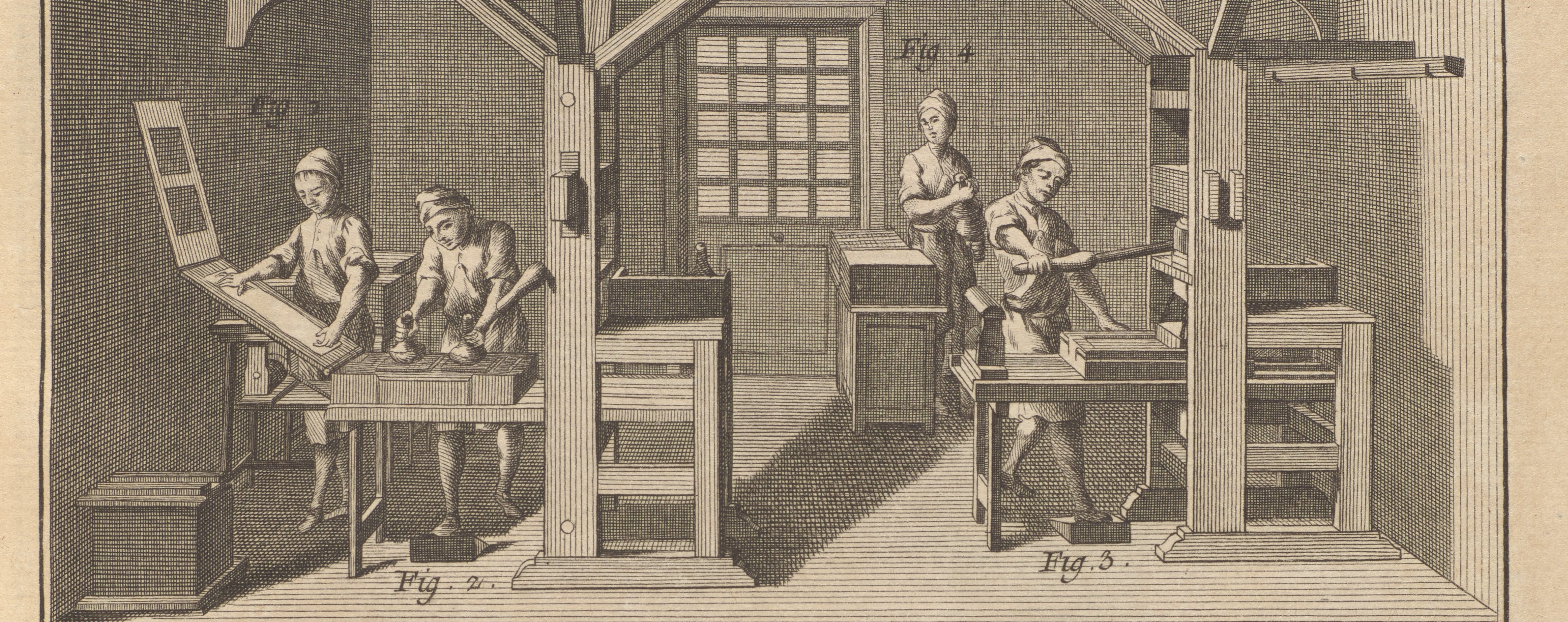
The story behind the naming of the journal n+1 has it that the founding editors were sitting around wanting to start a new literary review, and one of them said “the world doesn’t need N + 1 literary journals,” or something to that effect, and so these founding editors, being the kind of thoughtful, intelligent, self-aware and self-reflexive Brooklynites that they were, had found their name, one that embraced its own gratuitousness and so paradoxically made it an essential ingredient in the concoctions of taste that would define a generation of literary and critical sensibilities.
Artlance does not have designs on being the Nth + 1 magazine of art criticism, and rather than chase the dream of defining a new sensibility or scene (which pursuit is to be applauded for sure), the point of Artlance is to get excellent and experimental art criticism paid for by paying writers to write it.
Because you are reading this on Substack or in your email, you are already aware that media is undergoing a “newsletter revolution.” Services such as Substack and Medium and Ghost have made it easier than ever for writers to self-publish their work and to build and connect with an interested and engaged readership. As I have written elsewhere, the business model for newsletters doesn’t work for art criticism (it doesn’t work for many other genres of writing, or for most writers, either). But for the model of “commissioned independence” that Artlance is pioneering, this wave of “social-publishing” has a number of advantages.
Writers First
Artlance is a “writers-first” enterprise. It’s a means to organize the economics and logistics of a genre of writing—criticism—which the legacy models of media have been failing to support, and which the new models of audience-monetized publishing can’t support either.
We have the advantage of having these other models in full view. Though they have revealed themselves to be lacking, they have provided an essential service: legacy outlets have been the proving ground upon which great art writers have developed their reputations, and newsletters and online outlets have created a means by which new talent can be identified.
But rather than attempt to wrap these writers up behind a branded masthead, which cannot help putting the interests of the brand—the business of the brand—ahead of its writers, Artlance meets writers where they are, which today is as freelancers (always with many other gigs) who publish in numerous places and increasingly through channels like this one.
Artlance has to lead with its writers because that is the value it is providing: the writers’ talents and intelligence. Artlance is not selling page views or an audience to advertisers, nor is it taking a cut of subscriptions, and so looking to grow reader numbers at all costs. It is offering ideas and evaluations in the form of the written word, and this to the people who claim to want them most. Which means the words have to be exceptional. Which means the people who write those words will always come first. Our proposition is that what is good for talented and intelligent critics—getting paid decently to apply their talent and intelligence in writing—will be good for Artlance.
Self-publishing shows who can write
I have served in editorial roles of one capacity or another in the arts media for more than twenty years. I have a deep appreciation for editors, and editing. For the very minor genre of editors writing on editing, I am a sucker.
And so it is with open eyes and a full heart that I side with Brian Patrick Eha when he writes:
Editors are not alchemists. They can nudge, suggest, critique, cajole, all of which may benefit a genuinely gifted author. Bad writing, though, can rarely if ever be transmuted into good through an editor’s good offices. The issue is one of arithmetic. Editors typically subtract, rather than add, material, and yet the fault of bad writing lies often in what is lacking: a finer ear, a more (or less) critical eye, a richer vocabulary; a sensibility more delicate or immense, an imagination more visionary or acute; or all of these; or none of these, but something equally invaluable and not to be supplied by dint of punctuation changes or deductions from the word count, however skilled.
Eha’s polemic against editing is worth reading in full (Sally Rooney fans beware: the sentences that follow the passage above cut deep and clean), if only because Eha details by extension what many of us already know: the art writing that appears in the pages of legacy and lifestyle magazines, or that gets pushed out of the various online content mills, has been dutifully styled and touched up by its editors so as to distract from what it otherwise lacks, and that is the raw beauty of an acute critical intelligence.
When a critic self-publishes, you get to see the mind at work. You may find an inelegant construction, a failure of a verb to hitch back up to its agreeable subject after some pregnant interregnum (or just bad mixed metaphors and purple prose like that), a typo or a homophone error—though A.I. has become good at catching these—but you also get a transparency, even a vulnerability, and something honest. You get thought about art, which is thought about the world, working itself out in words, and in the open. That is very worth reading.
Writing for one’s self
For all of that, then, self-publishing raises the stakes for the writer. Knowing that what you publish will appear on your own newsletter or blog or website or channel; knowing that it will not only go out to readers who have chosen to read you, and so have expectations (be they high or low), but also to a wider readership that one can’t know in advance (because nothing commissioned through Artlance can go behind a paywall); knowing that there is no heavy editorial process that you can secretly count on to “shape up” your writing because, well, you’re being paid dog shit for this copy so you don’t really put all that much care into those first drafts you write on your phone while waiting for your train or Uber to the next opening, thinking all the time that had you known this was going to be a volume business (well, not even a business, more like a volume “hobby,” which sounds worse), you might have made different life choices—knowing all of this means that you know the reputation of the writing redounds to you, the writer alone, and so the writing has to be good.
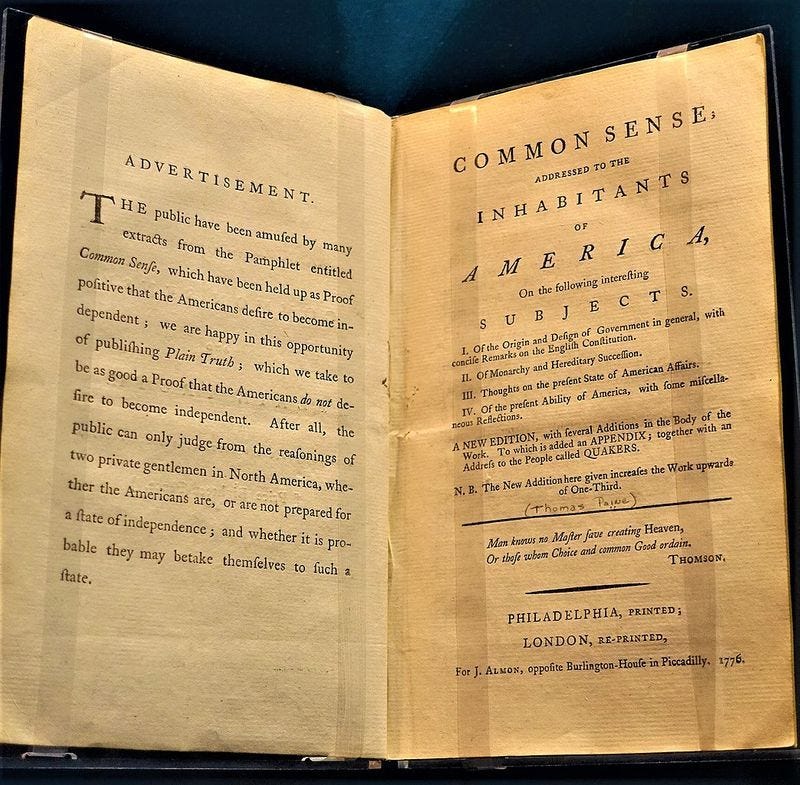
When commissioners ask me how Artlance ensures that the writing isn’t going to be junk, I have two answers: first, Artlance is working with the best writers. Our roster (which is growing) is exceptional and will continue to be. Artlance doesn’t have to worry about the quality of the writing because the writers who participate are—I would argue—incapable of producing bad copy. But if that doesn’t convince, then second, because these writers will be self-publishing their work commissioned through Artlance, they are very much writing for themselves as much as they are writing to fulfill a commission, and none of these writers became the critics they are by having low standards for themselves.1
Freedom
There is a world of writing that doesn’t need to adhere to the dictates of convention, and Artlance wants to tap into that world by encouraging writers to do so. Much art criticism today suffers from a kind of indolence (the same could be said for art), which has as much to do with the sedimented expectations for what criticism is, and with how and where it appears, as it does with the logistics and economics of how it is produced.
That it has been called a “newsletter” revolution belies its potential for experiments with other forms of writing and criticism that are available to writers who publish under their own steam. Fictions, scripts, dialogs, comics, letters, travelogues, legal briefs (er, maybe not), diaries, committee reports (er, really not), a fictional committee report made to the council of an alien city about its scandalous centennial exhibition (oh yes)—not every piece of criticism should be this, but some criticism should be this, or something like it.
“But writers need constraints!” it will be objected. “Writing short is harder than writing long!” it will be noted. “Criticism isn’t its own ‘art form’! It has a duty to the work and to its audience!” All true, in a way, but to which I would reply: Artlance has standards that must be met. Writers, as I have just written, have standards that they will not fail to meet. And commissioners—my wager is that commissioners want something more, and something different, than the standards they have been delivered to date: e.g., 675 dutiful words, squeezed down to 525 in a sequence of editorial wringings, all in the name of concision and that enduring fiction called column inches. “Don’t forget to mention the show or a work in an early paragraph, or else the reader won’t know what this is about!” “Could you describe this work in a bit more detail? We only have one image to run and it won’t be this one. But don’t go too long!” “Where were you going with this reference? It’s taking a bunch of space and you’re getting away from discussing the show.” “What’s this word? I’ve never encountered it before….” And so on.
Remind me how much I’m being paid for this?
Right.
“Self-publishing” on social platforms like Substack and elsewhere has long since stopped signaling that a writer couldn’t make it through the gates of legacy media. For much of what is appearing in the brand-name magazines and sites, it’s the first stop. Rather than treating those brands—with their particular standards and readerships and prestige—as the ultimate target, and so treating this work as a tryout for the forms of writing those brands valorize, why not take the self-publishing revolution out for a whirl? All we have to lose is our chains.2
Artlance is considering how to work with other publications, and specifically how to support the flowering of the online “small magazine,” of which there are many today. These we know are labors of love by their writers and publishers. Artlance understands them as outlets of collective self-publishing. Provided they do not solicit advertising, or put Artlance-facilitated work behind a paywall, and as long as they demonstrate a similar commitment to excellence and experimentation in art criticism, Artlance is here for them.
Editors’ note: We are including the transcript of the exchange with the writer so that the reader is aware of the lengths we have gone in attempting to excise this last utterly clichéd line, which here is wholly misapplied, as if the stakes of self-publishing could ever compare to the scope and seriousness of social emancipation:
Editors: Are you sure you want to end the piece this way? It’s a bit abrupt and, while, yes, you’re technically detailing some aspects of the newsletter “revolution,” surely you’d agree that not all “revolutions” can be treated thus and it’s a bit of a diminishment of Marx to use this line in this way in what is otherwise its own bit of—what’s the word for it?—“content marketing” I believe?
Writer: Go f**k yourselves.
Jonathan I LOVE this idea. This is so needed!!!! Bravo!